Day 3: Air Freshener! 

We opened this morning with a staff meeting of the lovely Global Research and Analysis group in the conference room, where they discussed everything from what information to disseminate to the rest of the company to deadlines regarding financial reports. The dynamic was exciting, and talk of business was lightened with inside jokes and funny visuals. At the end of the meeting, Khushi and I were incredibly surprised and humbled with a gift from the SAS group! We each received our own SAS labeled Camelbaks, as well as SAS’ signature snack, M&M’s! We then learned a bit more about SAS’ financial management software and the dimensions and functions that create reports with Kristina, and had breakfast for lunch and gelato with two other interns, Courtney and Adanna. In the afternoon, we learned about Accounting Operations and finished off the day with a bit of international tax talk.

– Grace 
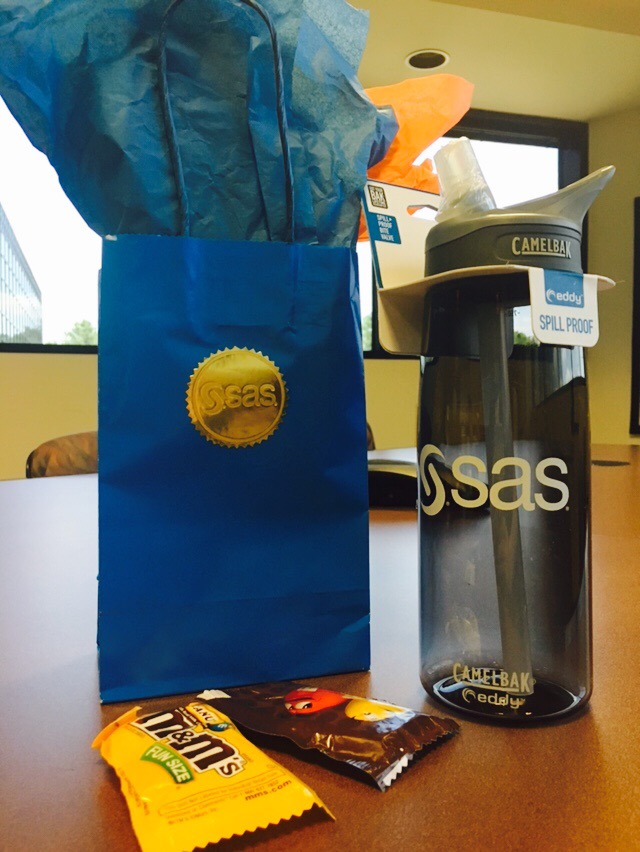

Our amazing gift from our new friends at GR&A! Did you know SAS is the largest corporate consumer of M&M’s at 22 tons a year??
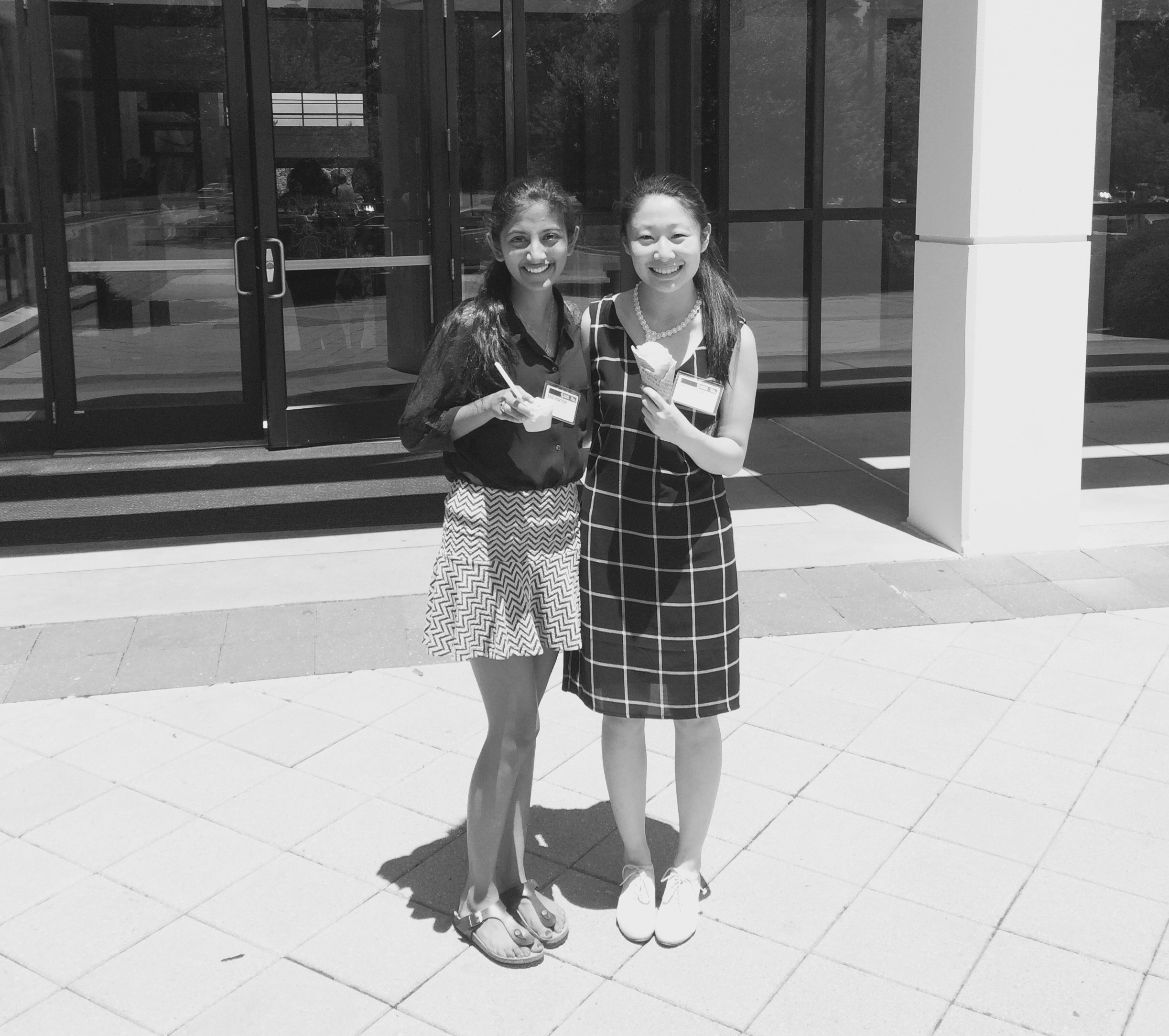
Khushi and I posing with our gelato.
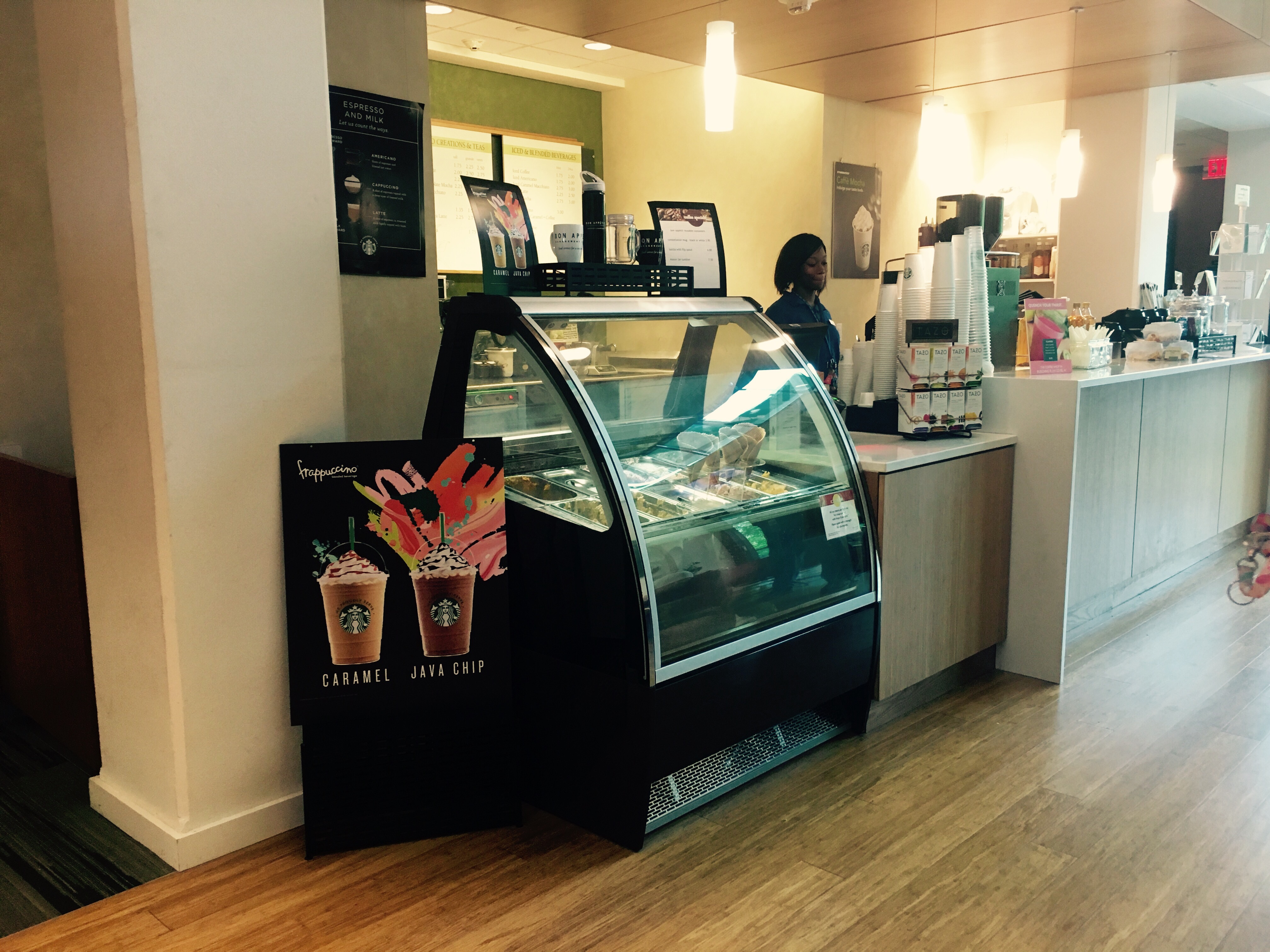
SAS has two on-campus Starbucks, which are heavily subsidized to give employees the best deals.
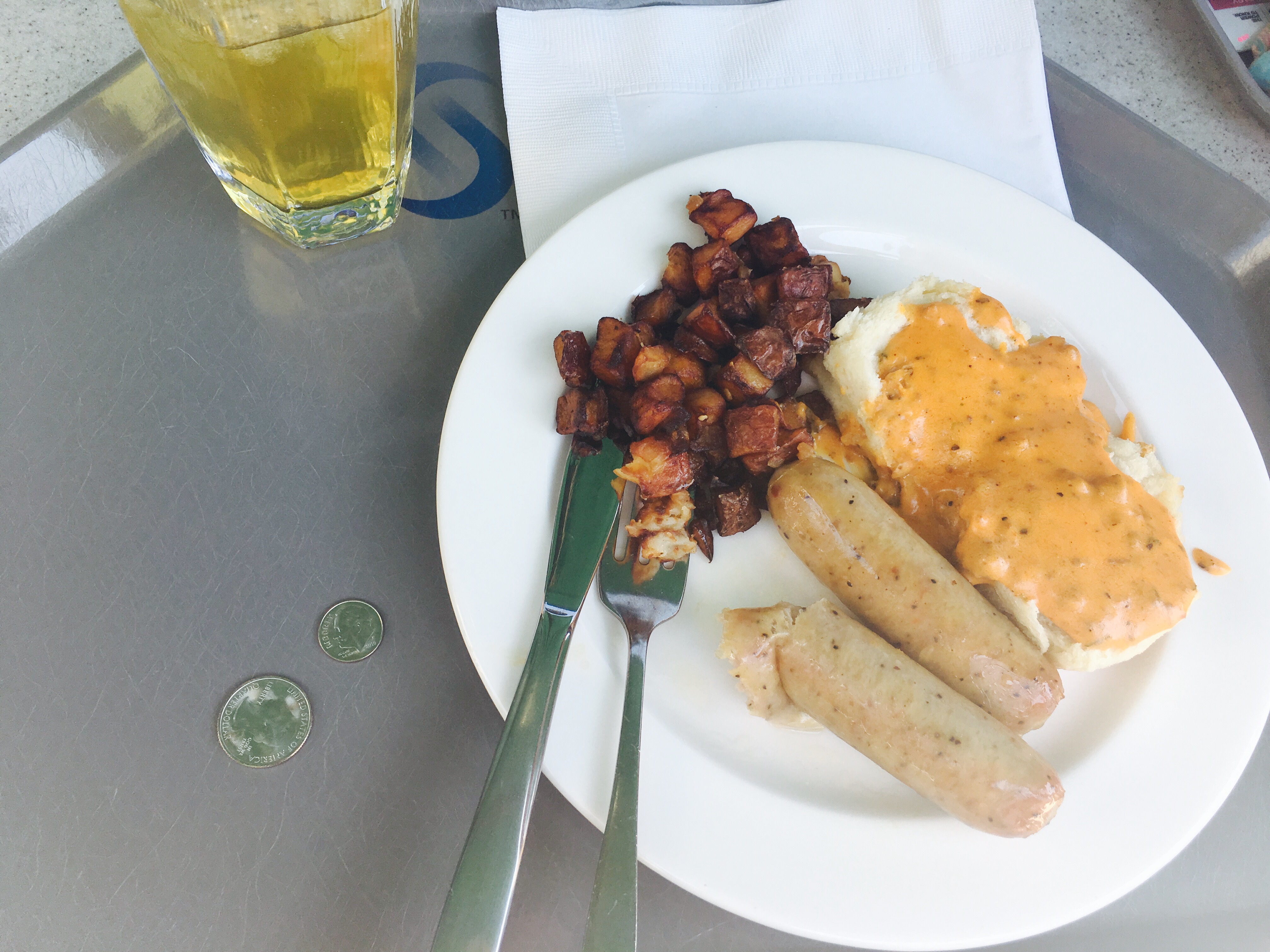
Today’s meal was breakfast for lunch!

Biomedical Engineering @ NCSU

I spent the day at NC States Biomedical Engineering Lab. I followed around a rising BME senior who showed me different projects he’s working on, as well as different research that’s going on. Here’s project for an exoskeleton design! (We couldn’t go in the room so I had to take the picture through the blinds). And here’s a tissue engineering research team taking bones out of mice! — Lindsay


Day 1: The Pre-Screening

Unfortunately I did not see Dr. McElreath’s email until returning home, I was kept quite busy today! I shadowed the optometric technicians today and watched them go through their normal test protocols. They conduct vision tests both with and without corrections (contact lenses or glasses). They conduct color vision tests without the correction and the depth perception test with correction. They also, if the patient agrees to doing it, take retinal photographs which can allow the optometrist to diagnose the patient with diseases such as glaucoma and eye infections. These photos can also help diagnose diabetes and hypertension. I also watched the technicians go through their process of interviewing the patients. They ask about a variety of things ranging from family medical history to how old a prescription is. I also got to watch how the receptionists in the front checked patients in and out and how information about a given patient is communicated from a technician to the doctor and vice versa. — Viraj

IMG_1597.JPG

Day 2: The Exam

Today was another busy day at the Eye Center at Southpoint Mall. I got to shadow Dr. Besharat today and got to see how she conducts her eye exams. The majority of the exams begin with checking the patients range of motion and then checking their prescription. Finally, Dr. Besharat asks the patient about any specific concerns they may have. Dr. Besharat diagnosed patients with glaucoma, cataracts, central serous retinopathy, and choroidal nevus. Glaucoma and cataracts are very common in patients and the other two conditions not so much. Central serous retinopathy is the clouding of macula that leads to blurred vision in usually one eye, it is caused by stress. A choroidal nevus is nothing more than a freckle on the eye that can sometimes cause a noticeable floater and other times can go unnoticed. It is very interesting how many unnoticed problems people have in their eyes and they think everything is OK because their prescription is working fine and they are able to see. I also got to see routine exams for updating prescriptions and changing contact lenses. At the end of the day I got to follow the entire appointment process from pre-screening to actually seeing the doctor. I also got to learn about their flagging system for their exam rooms. Below are photos of an exam chair, the actual machine used during an exam, and the flags near an exam room. — Viraj

IMG_1602IMG_1604.JPGIMG_1605.JPG

Day 2 a look into there past and future

imageI did a variety of things again I wrote a transmittal so that I could deliver some packages for the company to be able to start the building of one of there new projects they are working when I got there though the two people I was supposed to give the package to were not there they were at lunch so it took a little time to figure out what to do with the packages but it all worked out and I also went with my boss to take a look at some of the buildings they built and one of the projects that they are in the middle of and to end the day I listened in on a conference call and then on a normal meeting it was really funny because in the meeting jokingly they made fun of the people in the conference call and talking about how they were crazy and in the conference call they jokingly made of the people in the meeting for being unrealistic.

Tri properties internship begins

Tri properties is a construction management firm they do some land inheritances and the majority is land development where they rent or sell land for buildings and then they have to fill there buildings with tenants. I am interning here they gave me a nice office so that if they need me to type anything up I am right next to my boss who I am kind of just shadowing for a while as he teaches me what he really does as the major person in land development at the firm. I don’t think I am going to do as much building as I thought because I won’t be doing any construction but I will be learning about the other side of construction more the business side. I did a lot of different things from delivering property permits to city hall and going to a lunch meeting about what the company is doing as a whole and they showed me around the office and gave me my own office space.

image

Day 2 @ Dunn PT

Today I got to learn more different techniques and stretches that they use on a regular basis. One thing I got to see today was dry needle therapy. This is when they take little needles and use them to reach different tight areas in patients body’s. I saw it used today on a patient who had a hurt jaw. He was able to use the dry needles to focus on more exact areas of the jaw that were

image

hurting.

I also just wanted to say that I would take more pictures, but we arnt allowed to take pictures of the patients so it narrows down the things I can take pictures of. — Mackenzie

Dynamic Light Scattering

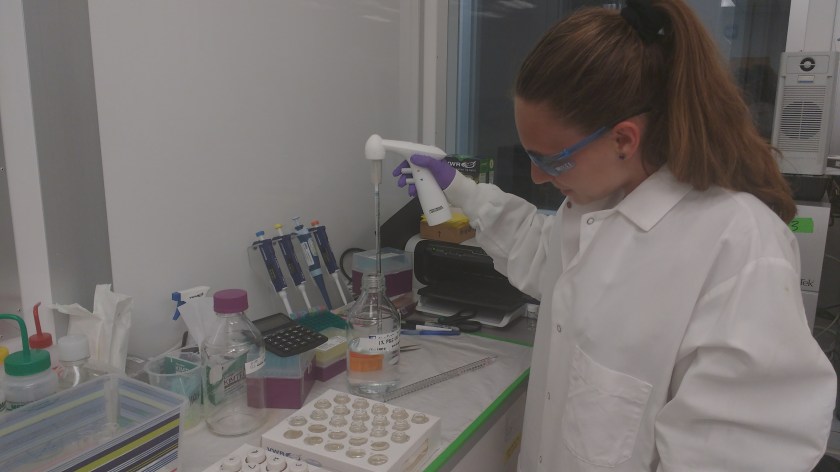
Today I researched dynamic light scattering and zeta potential. Changing the pH adjusts the charge of the particles and prevent aggravation to increase shelf-life. Ideally, all the particles will act as separate particles and not join together as conglomerates. The pH can induce a charge formation because the negatively charged particles will repel each other (as can surfactants and legions). I spent some of my own time learning about dynamic light scattering before participating in the experiment. Basically, it’s a way of determining size distribution of small particles or polymers in suspension in a solution. A laser is shot through a sample scatters lights of the particles and is collected by a photomultplier, and the resulting image is collected like static on a television. The speckled pattern can be analyzed to find patterns and trends. By the way, this is all based on Brownian motion, the idea that random motion of particles suspended in a gas or solution. Then, I participated in the testing of some of these samples before attending a lunch seminar on biometrics and policy. The lecture was very interesting study on stress in police officers in Durham (right after the famous Veil of Darkness Study conducted by RTI to test police officer bias) using high tech versions of fit bits. The emphasis was on the intervention of stress in this field in the future, based on the collected data. Directly afterward, I attended a conference call about the upcoming HIV project being presented on Thursday. To end the day, my pipetting skills were put to the test. I pipetted many test tubes with a buffer solution I mixed and diluted. Not only did I get to pick the music while doing so (sorry for the abundance of Train Phil), but I also had the opportunity to learn some more about excel in the process!

IMG_20160524_152430931

Lean mean pipetting machine!

First Day, Fun Day

What a whirlwind! The day started with a crash course of RTI with Dr.Rothrock, and the “ambassador of Emily”, Mr.Phil Durham. RTI was the first research center in North Carolina, which came from a push to keep local intellectuals in North Carolina after college graduation. Since it’s creation in 1958, RTI has acted as a means to innovate the world through science as an “in between” non-profit for university and industry. There are many facets to the research including policy, social science, statistics, economics, biology and chemistry. Phil Durham is a biochemist, specializing in particles, and is part of the team working on a major HIV prevention research project. Additionally, he is working on an aerosol powder to target Tuberculosis at its source – the lungs. But there is a wide range of projects occurring at RTI simultaneously. Dr.Rothrock (head of the HIV project) is also part of an NIH evaluation, as well as worked on a recent vaginal ring project. By the end of the day I helped work on the HIV prevention experiment, measuring the absorbency of light in a photometer. I even ran my own test and graphed it against a blank buffer sample to view the resulting trend!

IMG_20160523_124509710

Learning about light absorbency!

RTI Powerpoint: 2016 April Clinton Health

Excell Spreadsheet of Collected Data: Copy of Copy of EEL Dilution 8 5-23-16 Graph

Copy of EEL Dilution 8 5-23-16