Building!

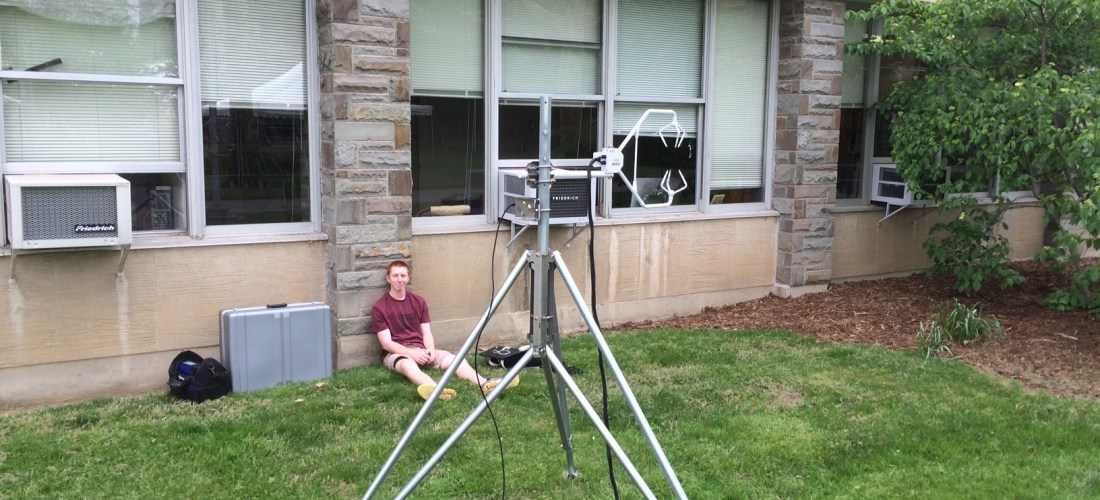
Today I was able to start using my hand more! We started off the day by reviewing many of the manuals and then we started building! The only problem was some of the manuals were not incredibly helpful so we had to be true engineers and try to problem solve. Eventually we were actually able to extend the legs of the tripod and from there everything went a lot more smoothly. We were able to get all of the sensors working and we even took 2 hours worth of data just to make sure all of the sensors and our program worked. One thing down many more to go…

Iain

Cameron Day 4 – “I love the smell of black carbon in the morning!”

– said no one ever.

Hello friends!

As you may have guessed (or not) from the title, today was mainly focused on testing the EMCs. We started after a quick job receiving and shipping a few items in Bay 3 (or section 3) of the building, and then returned to our normal station in bay 4 to meet with mr. J. Lynn Davis and Andrew Dart to discuss what they do at RTI. I also got to meet up with Emily and her guide, Phillip Durham, who seemed to be a pretty cool dude.

After lunch, we started working with the EMCs again. As the main person testing the filters (with my guide providing aid if needed), I got to light the kerosene lamp needed to produce the black carbon smoke, which was fun. The not so fun part ended up being blowing out the flame, because you get a big whiff of black carbon too. Do you know what that smells like? Imagine eating a box of chalk. It’s roughly the same feeling.

Being the main on that also means you get a lot of black carbon on you as well. Say goodbye to clean hands, folks. That’s a pipe dream.

Anyways, we got through a ton of tests today, and (despite screwing up several tests), we’re almost done with the work. I’ve think I may have gotten the nickname butterfingers at one point… Anyway, we expect to finish tomorrow, so wish us luck, please!

So, without further ado, Butterfingers signing off!

Day 3 there future

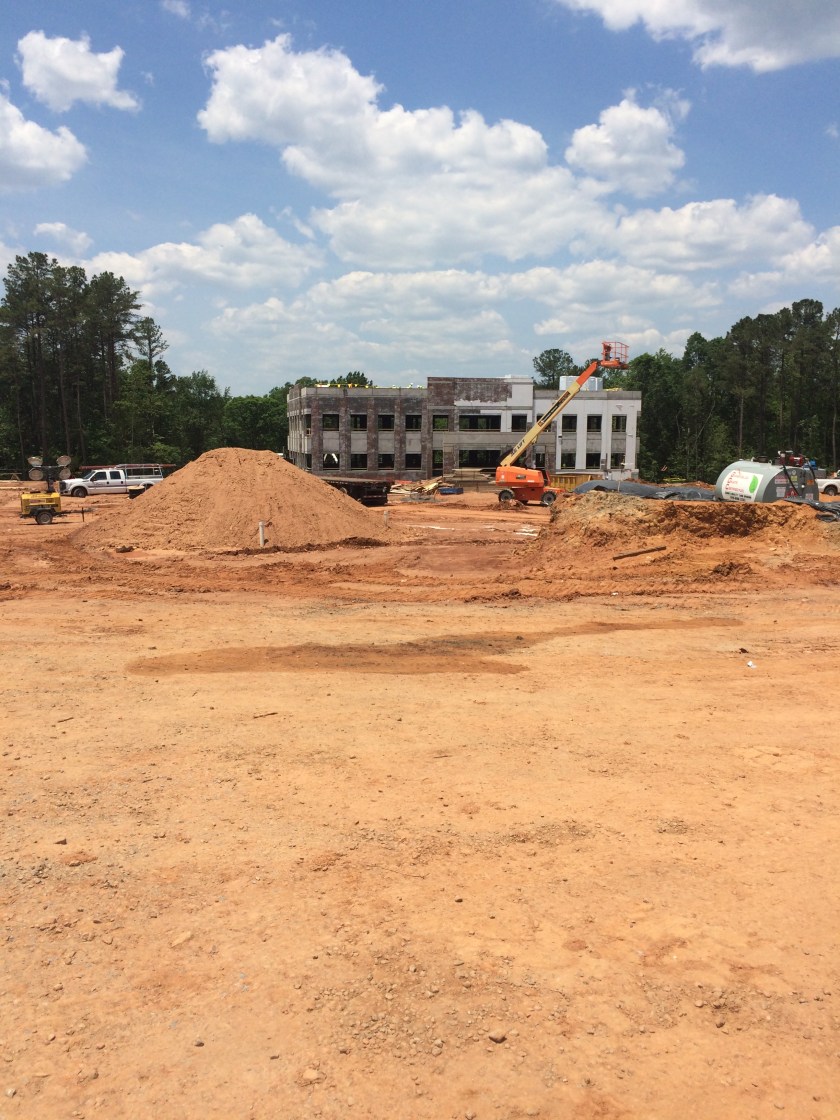
I started out in a conference call about one of there newer projects triangle orthopedics MRI pad and they had a broad overview like how is it coming sense the walls just went up yesterday then he sent me to drop off a package for the same project the contract he sent me to 2510 because that is the address he was given so I went there but there is no 2510 blue ridge so it was 3 buildings later that we found out it was actually 2501 and I finally delivered it and when I got back I went with them to there big office lunch at page road grill and they were going over the vacancy’s in there buildings. We then went to the site the meeting this morning was about and met with the person working the project with him at the site because they need to decide where they are putting the sign which is a lot harder than I thought. They still have not decided they need to talk to the guy that they are building for to help. When we got back to end we met with someone to upgrade there conference room with something that allows 8 people to project on there tv at once.

–Drewimage

Micelle, Surfactants, and Nanoparticles – Oh my!

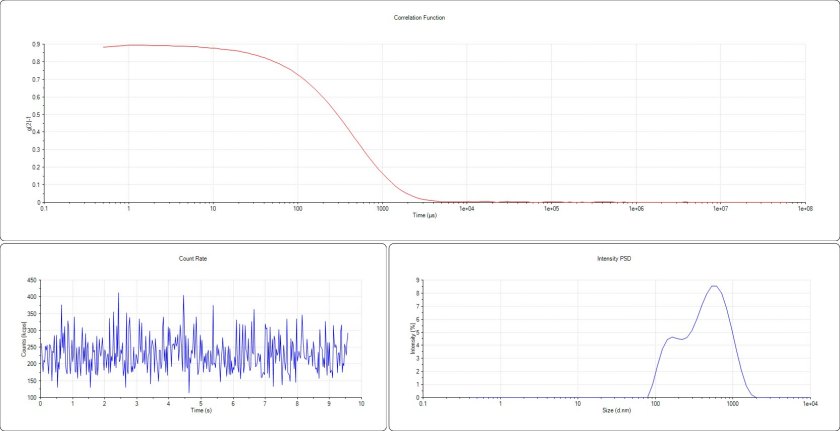
DLS example graph for Emily

Light Diffraction Data from a sample – for tips on what this means please browse the links below…

FAQ – ELS Overview         An_Introduction_to_DLS in 30 Minutes

There is never a shortage of things to do at RTI! Though the day started a little slow with some light reading (by the way the Tale of the Dueling Neurosurgeons by Sam Kean is a great read), once it started moving it never quite stopped. We continued some lab work from yesterday. First we ran samples (made from surfacant, chromium, and polymer) through a sonicator. A sonicator uses audio submerged in water to break up aggravated particles. Then we used a centrifuge to separate particles to the bottom. Next, came the fun part of syringing the solution into a curved cell to be put into a dynamic light scattering machine (or DLS). Surfacants are bipolar substances, which kinda look like tadpoles under a microscope, with a hydrophobic and hydrophilic end. Sometimes surfactants aggregate and form micelles, which are simply aggravated surfacant molecules in a colloid (a colloid is a mixture with insoluble substance microscopically dispersed). These micelles are spherical in shape with the hydrophobic tails facing towards the center. This brings us to the CMC (critical micelle concentration), which is the concentration of surfacants above which micelles form and all additional sufucants form micelles. THis is relevant information because when running the samples through the DLS the graphs will be erratic if the pH induced the formation of micelles and the size vary greatly. The purpose of an DLS machine is to track nano particles and the relative size of particles. One we reached lunch I got to sit in on the YP lunch presentations (that’s young professionals – man these people like their acronyms!). The presentations serve to bring people at RTI together to practice presenting their findings to a group in part to share their findings with other departments and to also give those with less established careers to have the experience of presenting. I heard a lecture on mapping the innovation process and the iterative cycles of learning and focus, fluorescent carbon nano particles found in coffee and fruit juices (presented by the one and only Phil Durham), and idea generation in relation to energy technology development. We then spent the remainder of the day continuing the study and learning about polymers. Yay!


Collecting Data (day 3)

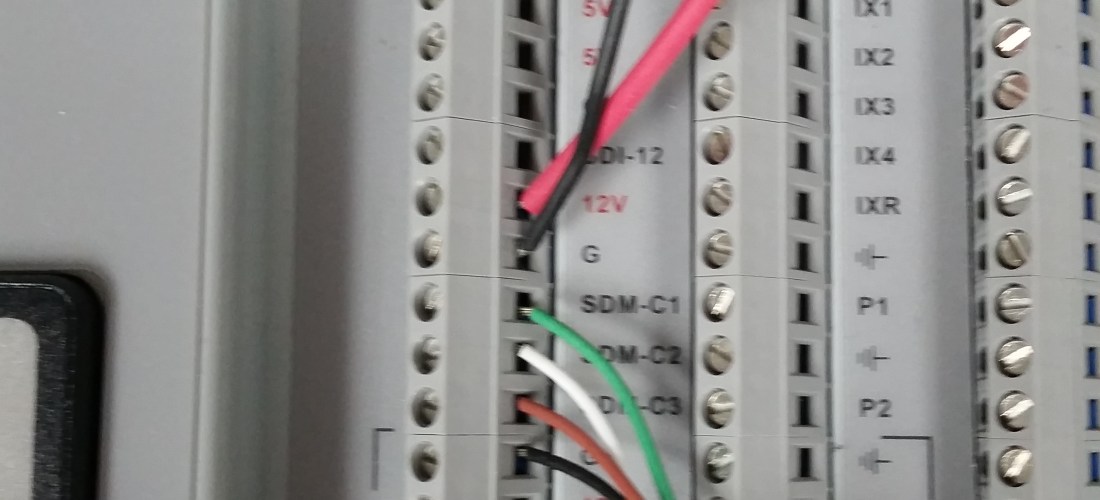
Today I was able to help wire some of the sensors into the data logger that we will be using in the field. I then took some pictures (one of which is attached) of the wiring, and then compiled the pictures into an excel chart to show where the wires go. We will print out this spreadsheet so that we are able to bring it with us when we are setting up data collection outside of the lab. I was also able to familiarize myself a little more with programming as well as the setup of the equipment. Tomorrow we will setup some of the equipment to make sure we know what we are doing when we get to the site. — Iain

Cameron Day 3 – the Mystics of Optical Density

It’s… Get ready for it, HUMPDAY!!!!!

Anyways, hi friends!

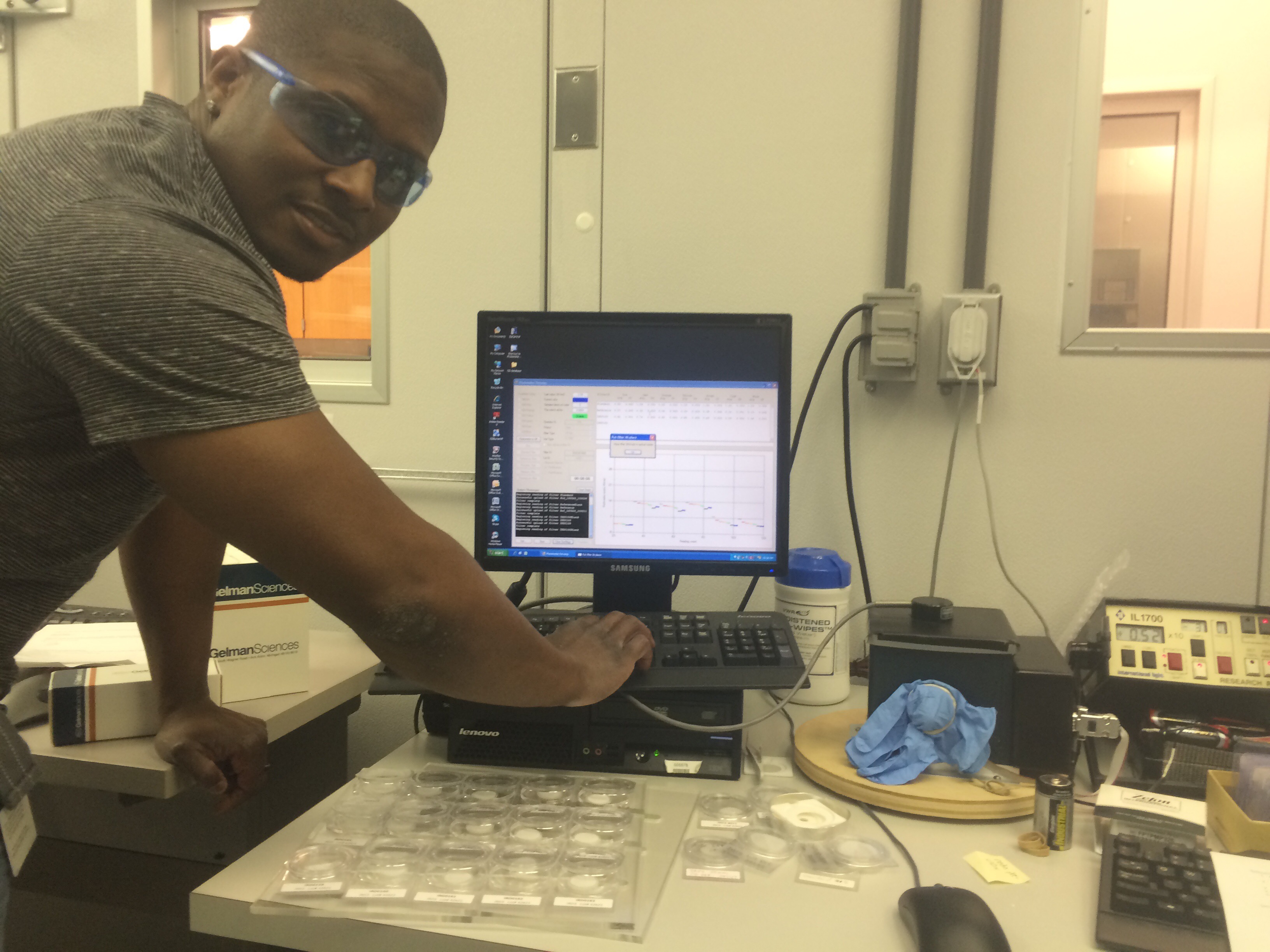
Cameron again. I hope everyone is enjoying their week so far. Mine has been especially fabulous, and we started a new activity in preparation for the main project. Yesterday, I cleaned filters and put them in their proper placement. Today I tested the optical density of each, which is where we place them into a machine and run them through the color spectrum, recording how much light gets through. Hers a picture of the machine:
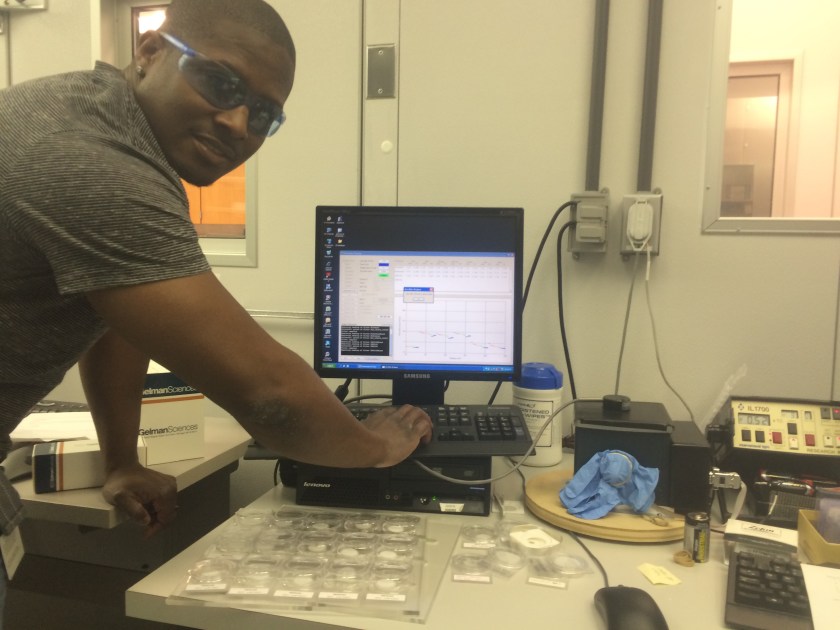

Jason McNeill (in the picture above) was my guide during this activity, and it was quite interesting utilizing the software. Despite several technical difficulties, I ended up processing all 50 plates in time for Jason to check their weights using a very, very picky machine. It took 15 minutes for just one filter at one point!

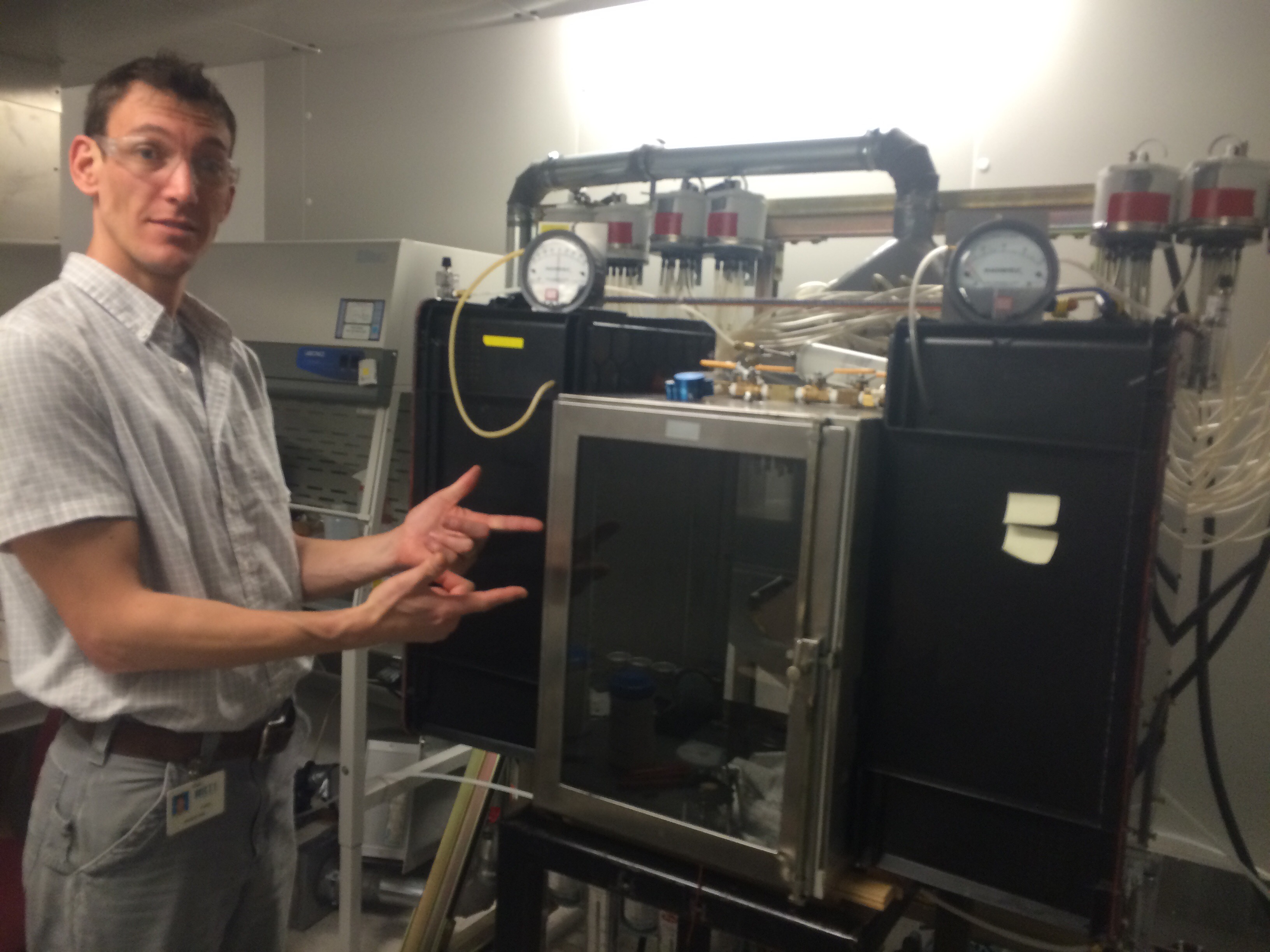
After helping out Jason, Mrs. Michelle took me to meet Andrew Dart, where we discussed some of the finer points of his machine. This machine, as it so happened to be, was the one we used for ECMs, and is picture below along with Andrew.


Andrew built both this and the extremely complicated machine hidden behind the one we used. It’s pretty awesome! He also works on the fireman project I discussed in my first post. Pretty cool, right? Not to mention he looks kind of like Sherlock from Masterpiece Mysteries…

Anyway, that’s pretty much everything for today.

Happy Humpday everyone!

Cameron L.
Day 2 a look into there past and future

imageI did a variety of things again I wrote a transmittal so that I could deliver some packages for the company to be able to start the building of one of there new projects they are working when I got there though the two people I was supposed to give the package to were not there they were at lunch so it took a little time to figure out what to do with the packages but it all worked out and I also went with my boss to take a look at some of the buildings they built and one of the projects that they are in the middle of and to end the day I listened in on a conference call and then on a normal meeting it was really funny because in the meeting jokingly they made fun of the people in the conference call and talking about how they were crazy and in the conference call they jokingly made of the people in the meeting for being unrealistic.
Tri properties internship begins

Tri properties is a construction management firm they do some land inheritances and the majority is land development where they rent or sell land for buildings and then they have to fill there buildings with tenants. I am interning here they gave me a nice office so that if they need me to type anything up I am right next to my boss who I am kind of just shadowing for a while as he teaches me what he really does as the major person in land development at the firm. I don’t think I am going to do as much building as I thought because I won’t be doing any construction but I will be learning about the other side of construction more the business side. I did a lot of different things from delivering property permits to city hall and going to a lunch meeting about what the company is doing as a whole and they showed me around the office and gave me my own office space.

image

Dynamic Light Scattering

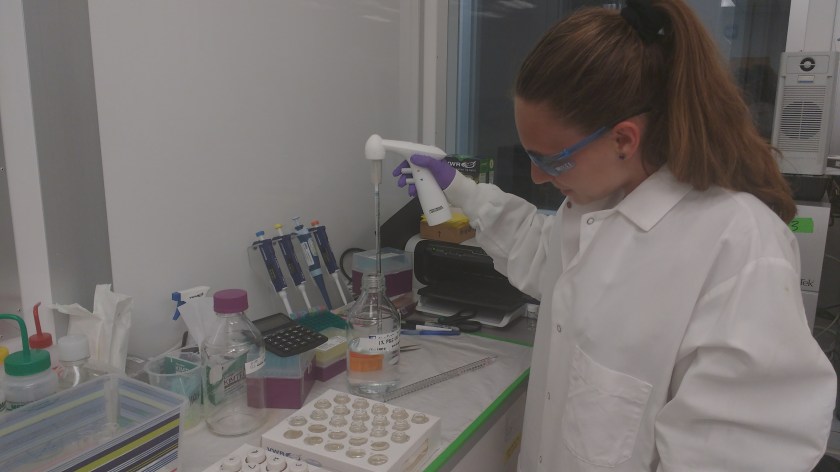
Today I researched dynamic light scattering and zeta potential. Changing the pH adjusts the charge of the particles and prevent aggravation to increase shelf-life. Ideally, all the particles will act as separate particles and not join together as conglomerates. The pH can induce a charge formation because the negatively charged particles will repel each other (as can surfactants and legions). I spent some of my own time learning about dynamic light scattering before participating in the experiment. Basically, it’s a way of determining size distribution of small particles or polymers in suspension in a solution. A laser is shot through a sample scatters lights of the particles and is collected by a photomultplier, and the resulting image is collected like static on a television. The speckled pattern can be analyzed to find patterns and trends. By the way, this is all based on Brownian motion, the idea that random motion of particles suspended in a gas or solution. Then, I participated in the testing of some of these samples before attending a lunch seminar on biometrics and policy. The lecture was very interesting study on stress in police officers in Durham (right after the famous Veil of Darkness Study conducted by RTI to test police officer bias) using high tech versions of fit bits. The emphasis was on the intervention of stress in this field in the future, based on the collected data. Directly afterward, I attended a conference call about the upcoming HIV project being presented on Thursday. To end the day, my pipetting skills were put to the test. I pipetted many test tubes with a buffer solution I mixed and diluted. Not only did I get to pick the music while doing so (sorry for the abundance of Train Phil), but I also had the opportunity to learn some more about excel in the process!

IMG_20160524_152430931

Lean mean pipetting machine!

First Day, Fun Day

What a whirlwind! The day started with a crash course of RTI with Dr.Rothrock, and the “ambassador of Emily”, Mr.Phil Durham. RTI was the first research center in North Carolina, which came from a push to keep local intellectuals in North Carolina after college graduation. Since it’s creation in 1958, RTI has acted as a means to innovate the world through science as an “in between” non-profit for university and industry. There are many facets to the research including policy, social science, statistics, economics, biology and chemistry. Phil Durham is a biochemist, specializing in particles, and is part of the team working on a major HIV prevention research project. Additionally, he is working on an aerosol powder to target Tuberculosis at its source – the lungs. But there is a wide range of projects occurring at RTI simultaneously. Dr.Rothrock (head of the HIV project) is also part of an NIH evaluation, as well as worked on a recent vaginal ring project. By the end of the day I helped work on the HIV prevention experiment, measuring the absorbency of light in a photometer. I even ran my own test and graphed it against a blank buffer sample to view the resulting trend!

IMG_20160523_124509710

Learning about light absorbency!

RTI Powerpoint: 2016 April Clinton Health

Excell Spreadsheet of Collected Data: Copy of Copy of EEL Dilution 8 5-23-16 Graph

Copy of EEL Dilution 8 5-23-16