Just Crush It

Did I ever think I would spend my time crushing butter-mints…not quite.

IMG_20160602_104126420.jpg

No longer minty fresh 

It turns out it’s a lot of fun! Phil taught me the formatting of a real lab experiment by doing a mini experiment on butter-mints, a pretty big change of pace from our previous tests. Basically, we measured the durability (specifically how much force it can take before it splits) of the mints on a Chantillon 200 LBF machine. After I collected the data we discussed possible variables and then Phil gave me a crash course in Excel. He also explained various statistics used for data analysis like ANOVA, and Pvalues.

Excel Data: Butter Mint Crush

Next, we ventured to NC State to meet a group of scientists that work in a BSL3 lab, which is a lab containing “safety” chemicals that can be harmful to humans and could possibly be used detrimentally in large quantities. The purpose of the meeting was to discuss proper safety procedures and determine how to manage the various pathogens being used. Phil and Jean are involved in a study that is about to take place concerning the Zika virus and its effects on cells and tissues. It’s important to use extreme care to minimize possible exposures to the diseases being tested in the lab (which includes Rocky Mount Spotted Fever and Bartonella). The coolest part, however, was getting to tour the lab and see how all the safety procedures are implemented.

I ended my last day with a mini staff ice cream party in front of the copy machine (classic) and Sarah showing me the basics of a SEM machine. An SEM machine uses a beam of electrons to chart the typography of the surface of particles. To be completely honest this just means it takes super cool up-close photographs of particles and stuff (kind of like a fancy microscope for materials). The photographs you’ve seen of thread and other fabrics (hair is a popular one for shampoos) close up are probably produced using an SEM machine!

I can’t believe the internship is over! It has been an amazing experience, much better than anything I could have ever imagined and I hope everyone has an opportunity to do something similar before college!

IMG_20160602_162448839.jpg

IMG_20160602_162506536.jpg

Cameron Day 3 (repost?) – the Mystics of Optical Density

It’s… Get ready for it, HUMPDAY!!!!!

Anyways, hi friends!

Cameron again. I hope everyone is enjoying their week so far. Mine has been especially fabulous, and we started a new activity in preparation for the main project. Yesterday, I cleaned filters and put them in their proper placement. Today I tested the optical density of each, which is where we place them into a machine and run them through the color spectrum, recording how much light gets through. Hers a picture of the machine:


Jason McNeill (in the picture above) was my guide during this activity, and it was quite interesting utilizing the software. Despite several technical difficulties, I ended up processing all 50 plates in time for Jason to check their weights using a very, very picky machine. It took 15 minutes for just one filter at one point!
After helping out Jason, Mrs. Michelle took me to meet Andrew Dart, where we discussed some of the finer points of his machine. This machine, as it so happened to be, was the one we used for ECMs, and is picture below along with Andrew.


Andrew built both this and the extremely complicated machine hidden behind the one we used. It’s pretty awesome! He also works on the fireman project I discussed in my first post. Pretty cool, right? Not to mention he looks kind of like Sherlock from Masterpiece Mysteries…

Anyway, that’s pretty much everything for today.

Happy Humpday everyone!
Cameron L.

Day 6 – Return of the ReTI

Fear ye all who enter here, for…
IIIIIIIIII’mmm baaaaaaaaaaccckkk!
Hey all,

Today’s the first day back for the new week, and I hope everyone had a wonderful day.
For me, I’d call today a good day, if a little on the less exciting side. However, it did start out interesting with a fire truck in front of one of the entrances to RTI, as depicted below:

Never figured out why it was there, but I hope everyone was safe!

Otherwise, there were a ton of meetings, with a right off the back discussion with Dr. Thornburg, Emily, and I on questions with what he does at RTI and his average workday. After meeting Dr. Thornburg, Mrs. Michelle and I shipped out some sensors to one of the projects she started. Here’s a picture of the final packaging:


After that, we went to a safety meeting where I trailed behind lost as they argued over room numbers and the like. Apparently, they were making sure the old building design door numbers and the new blue print door numbers matched up. Interestin, to say the least. Later, Mrs. Allen stopped by for a quick check up and tour by Dr. Thornburg. 

After meeting Mrs. Allen, but before lunch, we learned how to use the software for the new micropems, which we are starting work on tomorrow. For lunch, I had a delicious cheeseburger and onion rings, and happened to meet Jonathan and Kiran who had transferred from to the forensics department of RTI for this week, an unexpected, but welcome, surprise.

After lunch, we retrieved data from some field tests until a meeting with Mr. Mecham, who gave some life tips and shared his background with us, much as with Dr. Thornburg this morning.

That pretty much concludes my day. I hope you all enjoy your day as well!

Sincerely,

Cameron L.

P.S. For those confused with the title’s joke, 1) it’s a reference to Star Wars, and 2) RTI stands for research triangle institute, so I just extended the first word for RTI to make ReTI… So yeah, hope you enjoyed the joke!

Day 7 – “The name’s PEM, Micro PEM.”

Hi all,

So today was a busy day!

We started micropem testing, then had a meeting with Mr. Marty, a chemical engineer at RTI, which lasted an hour and a half. We also visited his labs, but weren’t allowed a picture inside due to defense projects. Here’s one of us outside the door though!

After that was a lunch meeting with Mrs. Swung-Hyun, another worker at RTI in my building (number 11). Both mewing were extremely informative, although I’m partial to Mr. Marty’s myself since I want to be a chemical engineer.

After lunch, I suited up in my testing gear (featured below, excluding the static gun, my inspiration for today’s title) and started collecting data by walking around various areas in the vicinity while the pumps sucked in nearby air.

All in all, an exciting day. I hope you enjoyed my update!

Cameron L.

Day 8 – Classroom work in the outside world?!

Hello all!

Today was a busy day, as all good days are, sometimes. Anyways, it started out extremely interesting as I met the mysterious bad parker of building 11. Apparently, whoever they are, they always park on the line so that no car is to close to theirs. Usually it’s in the back, but today they were in the front row, so many, many more people saw them. Here’s what it looked like:


Incredibly rude, right? If you say no, I want you to move your car now. Literally, stop reading and move your car to the appropriate position. Done? Now let’s continue.

Today’s first task was aldehyde testing, and as we moved to Johnson building for the appropriate equipment, we ran across this little guy here:


… Or maybe not so little. The point is, the only reason I noticed was a startled scream that shocked me into stopping. That was fun, if slightly scary. Taking the long path due to Mrs. Michelle’s insistence, we finally arrived at our destination.

Now, we all know classroom work hardly seems like work in real life, right? Well, aldehyde sampling is a lot like classroom work, where we mix a bunch of chemicals and measure the results, but with this fancy machine:


Which is a HPLC system, or high pressure liquid chromatography system. This does a lot of minor measurements and records data that the naked eye wouldn’t normally see.

Anyways, after that we ate my final lunch at RTI before heading to meet Leag Johnson, a biochemist at RTI. After that meeting, I prepared sample filters for equilibration and post ODs/graphs.

Hope you enjoyed my day!

Cameron L.

P.S. Here’s some extras from today.

Hazardous waste dispenser 

Funny sign


Video of vacumn to get rid Air/gas

Containers for the aldehyde

The Good the Bad and the Ugly

IMG_20160601_155059619

At a lunch meeting today I was asked what I would change about the intern program at RTI, my answer: nothing.

There was a tense silence during which Cameron and I looked at each other, both deliberating the entire experience, but everything had gone so well I couldn’t think of anything even remotely critical to say. Take today for instance, we met so many different, amazing, people. First we met Marty, a chemical engineer, who was so incredibly passionate about his work that he talked to us for hours about alternative fuel and increasing the efficiency of preexisting fuel options. He even toured us around all the labs and pointed out different radiators and their functions.

Then came Seung-Hyu Cho. She grew up and studied in South Korea before realizing she wanted to be a scientist and transferred to the University of Cincinnati to fulfill her dream. She talked about her job at RTI and how she got to where she is. Stephanie also shared her experience coming from Clemson to a corporate lab to RTI. But of course the lunch was not complete without a lengthy conversation about cats!

The coolest part of the day came when Stephanie and I (and later Phil) assembled test HIV devices from the films we cast yesterday. The job was tedious no doubt, and I’m sure Stephanie dreads every minute, but I thought it was so much fun to work in a group – constantly solving problems, coming up with new solutions, and joking about it the whole time. I learned how to heat seal the film and stuff the “drug” into the film using a complex (and rather scrappy) series of homemade funnels and “poking devices”. As it turns out I know about pretty much no movies ever. To quote Phil, “ask her if she knows a movie..any movie…the answer will be no”. And ironically a high tech lab filled with millions of dollars of equipment has a lack of functioning scissors (which caused us to label them with happy or sad faces). I think it’s awesome how they can make every chore fun and exciting. It truly is a testament to the ambiance of RTI. I wish I could never leave.

IMG_20160601_201912

Testing out our device with this gigantic needle

Left: Phil goofing around with the labeled scissors- the good, the bad, and the ugly  🙂 😦  

Right: Hey look that’s me! 

Polymer = Many Things

Lets break it down…shall we…

Up close and Personal: Pictured above are two polymer films under a microscope 

Today was all about polymers, which directly translated means many things. And they are not wrong, polymers are actually a combination of hundreds, thousands even, of molecule chains. This makes them easy to melt, easy to mold, and most importantly easy to work with. Some even go as far as to call it “hobby plastic”, because of its eclectic properties. A material scientist I met today, Stephanie, taught me how to make the polymer films used in the HIV prevention devices. I even made the solution using the calculations attached (thank you Mr.Rushin for making this possible)! Then she showed me two different films under a microscope. The polymer itself is a peachy color and the crystals actually refract light, making some pretty awesome rainbows. On the computer, however, the lens is black and white so the colors don’t really show.

Cameron and I also got to talk to several different scientists today as well. First we were introduced to  Jeff, who is an aerosol specialists focused on preventing harmful contaminates and particles from being inhaled into the lungs. He is currently working on a project to create small measuring devices that can be worn by people with potentially hazardous exposures. Not only is his work interesting, but he was more than willing to give us life advice as well. He emphasized the importance of introspection and self-reflection when thinking about possible choices –  whether it be college decisions or career paths. We also met with Sarah and Jeff, both are scientist specializing in polymers. They both shared their experience in the science field and how they got where they are today. They too encouraged us to take opportunities in college and to get to do as many internships and research as possible.

Calculations: Amount of PCL to use

IMG_20160531_205649628.jpg

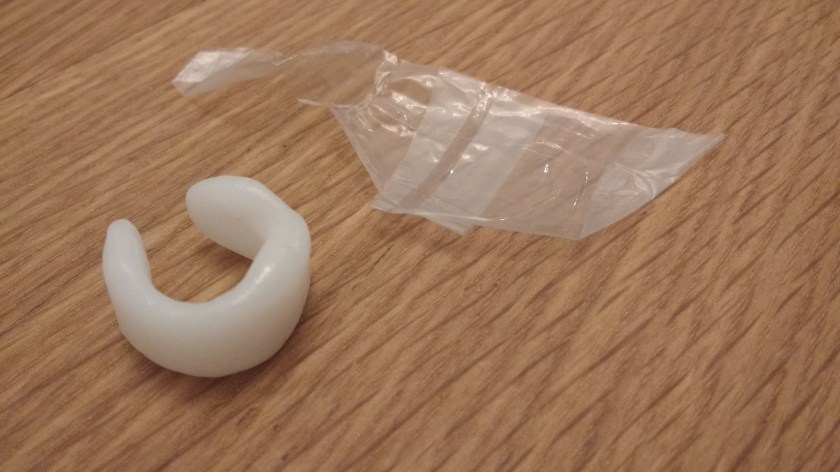
Some polymer film I made heat sealed together next to a polymer ring

Mexican and Aerosol

If you find this title confusing you should. The two do not go together, but somehow at RTI the most seemingly separate of things come together in a beautiful synthesis. Each person, each member of the team, each sector of RTI, is filled to the brim with professionals that facilitate the marriage of outlandish theories in the most innovative of ways. My day was not any different. It started a little slower than normal (it was a Friday after all), but what I’ve learned about  RTI is when things pick up they never quite stop. I did some light reading in Science News, a weekly press release that covers interesting journal articles from a variety of science fields. Then Phil taught me about the tuberculosis project they are currently working on. Basically some drugs referred to as POA and PAE (one is an ester and one is an oil) were made into uniform powders using a complicated processes that I will not go too in depth into. This process is preformed in several meticulous stages to “purify” these solutions into fine powders. The drugs work by binding to an enzyme present in some strands of TB, which allows it to be absorbed into the think layers of the TB bacteria. The drug changes into its -OH form to target the TB in the lungs. The peculiar part is that, although the drug greatly reduces TB in the lungs, (where it is dispersed) it completely eradicates the disease from the spleen. How curious. Almost immediately after this explanation (which was accompanied by data and a pretty nifty slideshow), I sat in on a conference call with both Phil and an aerosol specialist named Tony. The conference call was with a representative from an video journal. There used to be a device on the market used to administer aerosol drugs for animal testing. Recently, however the company has ceased production and there is no longer anything available for this administration. RTI has created a sterile device akin to the originally manufactured to be released soon. Because the production of it is best understood with pictures and diagrams a traditional journal format would not be ideal, so they are interested in using this new video journal formatting. The conference call never ceased to be interesting, but I found myself even more enthralled in Tony, himself. I got to talk to him in length after the call and it was really interesting to hear about how he became involved in aerosols and what his prospective on modern day innovation is (plus he has written a ton of books and papers that are beyond cool). Around lunch, Dr.Rothrock, Cameron, Michelle, Phil, and I went to a Mexican restaurateur to eat lunch, where Dr.Rothrock shared her own story and described her job. Of course, the day could not go on without some final lab tests (I’m getting pretty fast with it by now) amidst some new funky tune Phil has found on Spotify! What a day! What a week!

(I apologize for the lack of pictures today, but a good portion was confidential and could not be photographed)

Day 5 – “Are we too efficient?”

Hello friends!

Not much to talk about today, sadly. Due to the phenomenal (if I do say so myself) work ethics of Mrs. Michelle and myself, we finished a lot of work during the first four days of this week. Unfortunately, our enthusiasm was not successfully mimicked by he rest of the department, so the last major project was delayed since we didn’t have the neccessary devices yet.

However, despite this tragic set back (absolutely tragic, I tell you), we were able to plow forward and make progress on the set back project, and we also aided other groups, which included work on a new inlet for the ECMs, to testing the optical density of some data Dr. Thornburg sent back from India.

In addition to our work, Emily and I also met with Mrs. Ginger Rothrock, one of the more senior workers at RTI. To those of you wondering, yes, this is the wife to our beloved sixth grade science teacher, who left some years ago.

Since there were no new projects or experiments today, I didn’t manage to get any attention grabbing photos. However, we should have the neccessary requirements to begin testing on a new project next week, so tune in for some awesome experiments on Tuesday!

Have a wonderful weekend!

–Cameron

Cool Conference Call

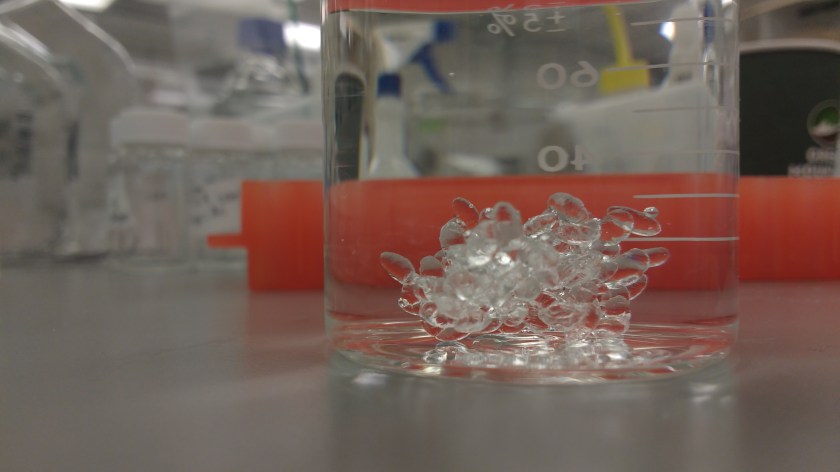
From beginning to end, the day could be described by the word productive. First thing Cameron and I met with a man named Lynn. Lynn specializes in LEDs, mostly working with variables like durability, color, brightness, construction, etc. HE even described a new technology innovating the light industry: phones. Now phones will be able to control lighting in a way never seen before. In cities with high crime rates it can be possible to install audio devices in outdoor light fixtures to detect gun shots and alert authorities. He also took the time to get to know Cameron and I and talk about the college process and a typical day in his position. After the meeting I got to meet Michelle, Cameron’s scientist, and she explained the devices they are working on to measure the amount of harmful particles created by cooking stoves in impoverished countries. After this, I spent a good part of the day cleaning the lab before the big conference call. During my awesome cleaning experience, Phil introduced me to polymers – a plastic with a low melting point which makes it easily melted and molded. When the plastic hardens, however, it becomes very durable and solid. We melted some of our own polymer in hot water and I scupted it into a ring . Next came the more serious part of the day! The “conference call” was really a high profile meeting explaining the outcomes of the testing (on the HIV project) to major donors. We watched the presentation on a projector and listened to the conversation (in case Phil had to be called on to explain a part of the research), while simultaneously running tests for the HIV project. At one point I observed plastic under a microscope to view the individual crystals. I also got to do much of the tests (yay pipetting!) on my own today. Nothing like science and a movie to end the day (or a conference call and some testing is good too)!

IMG_20160526_115315215

Polymer!